
I still remember the moment in late 2020 when Rare’s executive producer Joe Neate took to Twitter and told the Sea of Thieves community that 2021 would be the biggest year yet for the game. At the time, I have to be honest, I raised an eyebrow. Could a live-service pirate adventure that had already hit 15 million players really keep growing? After all, 2020 had been an extraordinary year for Rare, packed with regular content updates and major milestones despite the global pandemic. But looking back from 2026, that promise feels less like hype and more like the turning point for one of the most resilient co-op games of the modern era.
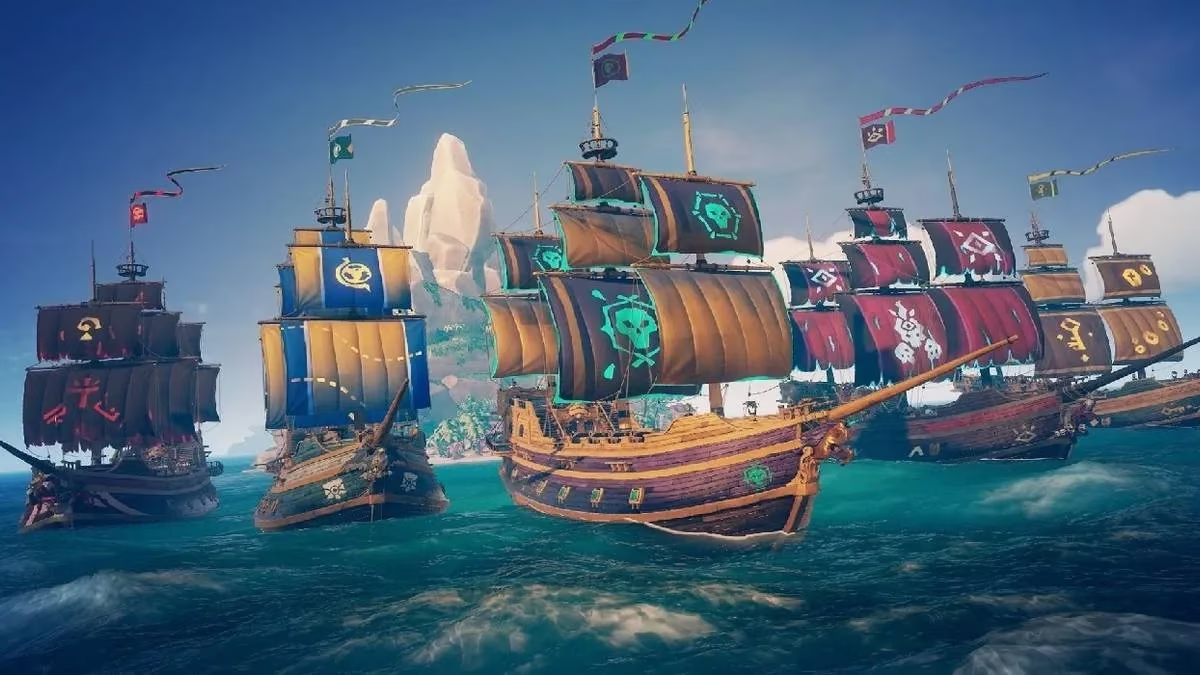
The December 2020 update, for example, wasn’t the flashiest patch Sea of Thieves had ever received. It focused on quality-of-life improvements and bug fixes, especially when compared with the meaty Fate of the Damned update from the previous month. Yet that quieter update said a lot about Rare’s priorities. Instead of only chasing headlines with big features, the studio also cared about the everyday experience of sailing, fighting, and exploring. Was that enough to keep players engaged? In hindsight, yes, because polish often matters just as much as spectacle.
Why 2020 Already Felt Like a Breakthrough
Since its 2018 launch, Sea of Thieves had grown from what many called a barebones experience into a fully fledged co-op adventure. PVP changes, new modes, and even cats found their way onto the seas. Every update felt like a new plank added to a ship that was slowly becoming something much bigger. Rare also celebrated the Xbox Series X and S launch by giving players the Duke ship, a small but meaningful gift that underlined the studio’s connection to its community.
According to Neate, it had been a long year for the team. That was completely understandable. 2020 made game development harder for everyone, with studios around the globe adjusting to remote work and shifting schedules. So when Neate still framed 2021 as an even bigger year, that confidence carried weight. It wasn’t just a developer trying to generate buzz; it felt like a crew that had learned to sail through rough waters and was ready for open sea.
The Shrouded Ghost Tease and the Power of Mystery
One of the most intriguing hints Neate dropped was the possibility of adding the Shrouded Ghost. For anyone who has spent hours hunting megalodons in Sea of Thieves, the Shrouded Ghost is practically a myth. It is the rarest of the game’s megalodon variants, and many players have never seen one in the wild. So when Neate suggested it might be part of the future, the community lit up. Would 2021 finally let players encounter this ghostly predator more reliably? I know I wasn’t the only one refreshing news feeds for confirmation.
Whether or not that particular creature received a dedicated update, the tease itself showed how well Rare understood its audience: mystery and rumor are the lifeblood of pirate stories.
A New Generation Sets Sail
2021 also arrived at a fascinating moment for gaming hardware. The Xbox Series X and Series S had just launched, and Sea of Thieves received a substantial performance update to take advantage of the new consoles. That was smart. Instead of leaving the pirate game behind as a last-gen title, Microsoft and Rare future-proofed it. Better frame rates, faster load times, and smoother sailing made the adventure feel new again even for veterans. When I first booted it up on a Series X, I was genuinely surprised by how much of a difference the next-gen patch made.
Sea of Thieves was available on Xbox Series X and S, Xbox One, and PC, which meant the player base could grow across generations rather than being split by them. That cross-platform foundation was already one of the game’s quiet strengths, and the next-gen update doubled down on it.
Did all of this guarantee success in 2021? Not automatically. Live-service games live or die by consistency, and the gaming landscape was becoming more crowded every year. But Rare had already proven it could deliver a steady stream of updates, and the studio seemed to understand that a pirate adventure thrives on stories, both scripted and player-driven.
Why the Promise Felt Credible
Looking back, I can point to several reasons the promise felt credible:
-
A consistent update cadence through 2020
-
15 million players before the end of 2020
-
Quality-of-life improvements alongside bigger content drops
-
A next-gen performance update for Xbox Series X and S
-
Clear communication from executive producer Joe Neate
Yet even with all of that, there were still questions. Could Rare top the Fate of the Damned update? Would the Shrouded Ghost actually appear? And perhaps most importantly, could a game about pirates maintain its sense of fun and freedom as it became more complex? Those questions were fair. Over the years, I have seen plenty of live-service games collapse under their own ambition. But Sea of Thieves had something many of them lacked: a strong identity. The fantasy of sailing with friends, digging up treasure, and surviving a surprise Kraken attack never really got old.
Final Thoughts from 2026
Now, from the vantage point of 2026, I can say that late-2020 moment was more than just marketing. It was a signal that Rare was playing the long game. The team’s willingness to focus on small quality-of-life fixes, while also teasing future content, showed a maturity that live-service games often lack. It also reminded me why I keep returning to Sea of Thieves: because the horizon always holds the promise of something unseen.
Of course, no one could have predicted every twist the next years would bring. But when Joe Neate said 2021 would be the biggest year yet, he wasn’t just talking about update size or player numbers. He was describing a philosophy: keep sailing, keep improving, and never let the seas grow quiet. In 2026, that philosophy still feels like the game’s true north.