
When Rare slipped cats into Sea of Thieves as traveling companions in fancy pirate attire, feline fans rejoiced. 🏴☠️🐱 The idea of a swashbuckling cat perched on a ship’s rail, wearing a tiny hat and judging everyone’s cannon aim, was enough to make plenty of players say, 'shiver me timbers.' But the cat’s out of the bag: those meows were not just canned sound effects. Rare revealed on social media that two real cats belonging to the studio’s Composer and Music Director, Robin Beanland, actually voiced the animals. The cats, named Beans and Heeb, were described as 'gorgeous grimalkins' who reluctantly used audio recording devices until they were bribed with fishy treats and snoot boops. It was a purr-fectly ridiculous and wonderful detail, and it made the update feel personal rather than prefabricated.
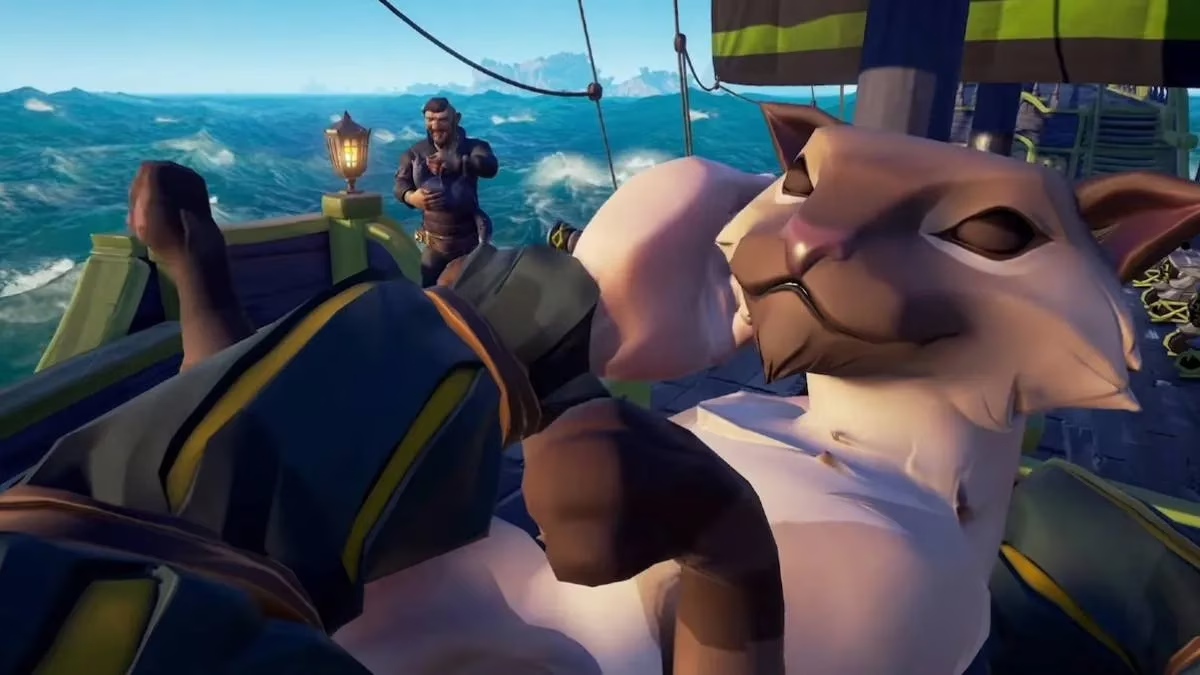
The update in question was Ships of Fortune, which launched on April 22, 2020. Cats in customizable costumes were arguably the flashiest, most social-media-friendly addition, but Rare did not stop there. The studio also added a new emissary system. That system let players join factions such as the Gold Hoarders or the Merchant’s Guild, fly an emissary flag, and earn extra rewards for representing their chosen crew. PvP elements in the online multiplayer sandbox also got a shake-up, giving pirates more reasons to watch the horizon and less reason to trust a friendly wave.
| Feature | What it brought to the seas |
|---|---|
| Cats | Customizable companions with real cat audio |
| Emissary system | Faction representation, flags, and bonus rewards |
| PvP updates | More risk, more reward, more paranoia |
Sea of Thieves had a somewhat lackluster launch in 2018 after being announced back at E3 2015. That is no secret. The game arrived with a strong foundation but a shallow content pool, and plenty of critics sharpened their cutlasses. Yet Rare, a long-beloved development studio, kept working. It updated the experience for its dedicated fans, season after season, patch after patch. Microsoft eventually announced that the game would come to Steam in the near future, and that version would be cross-compatible with other versions on Windows and Xbox One. For a game about sharing a ship with strangers, cross-play was a natural fit.
By the beginning of 2020, Microsoft confirmed that Sea of Thieves had been played by over 10 million players across eighty different countries. Rare Executive Producer Joe Neate said, 'The Sea of Thieves community represents the very best of what gaming can be.' That quote has aged well. The game’s long lifespan has made it one of the most successful new IPs for Xbox in the current generation of consoles, and its community has become the kind of rowdy, helpful, occasionally backstabbing family that only a pirate game could produce.
Many of Rare’s games have achieved similar cult statuses, particularly titles the developer released before it was acquired by Microsoft. The main one that comes to mind is Banjo-Kazooie, now represented in Super Smash Bros. It is unlikely that Sea of Thieves’ cats will hit the same level of fame as a certain bear-and-bird duo, but it is neat to get a behind-the-scenes look at how Rare continues to make its games more personal experiences. The studio did not just add a cat model and call it a day. It recorded actual cats, bribed them with treats, and turned their little meows into pirate history.
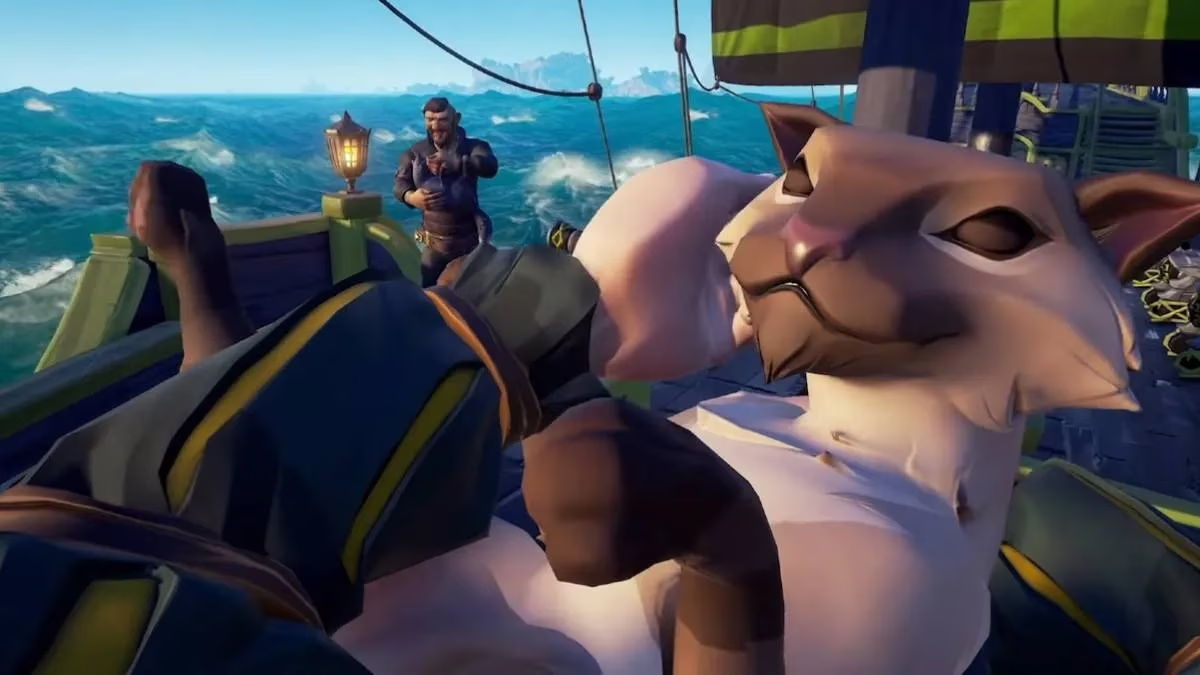
In 2026, Sea of Thieves is still sailing. ⛵ The game has expanded well beyond its original PC and Xbox One release, and it now lives on PC, Xbox, and PlayStation 5, with cross-play keeping the seas crowded. Rare has continued to update the sandbox with new seasons, events, and quality-of-life changes. The cats, of course, remain. Players can still dress them up, pet them, and hear the echoes of Beans and Heeb every time a furry companion lets out a meow. It may not be the biggest headline in gaming history, but it is a reminder that live-service games can still have a human — or feline — touch.
Rare also showed its charitable side when Sea of Thieves raised $76,000 for charity, proving that the pirate community can do more than steal loot and sink sloops. That combination of silly cosmetics, real cat recordings, and genuine community support is why Sea of Thieves has lasted as long as it has. It is not just a game about pirates. It is a game about the people — and cats — who make the voyage memorable.
So, in 2026, when a pirate cat meows on deck, there is a decent chance that sound has a real-world origin story. Beans and Heeb may not be household names, but they are part of the crew. And that is no tall tale. It is just Rare being Rare: a little weird, a little warm, and always willing to let a cat steal the show.
Data referenced from PEGI helps contextualize how long-running live-service titles like Sea of Thieves balance playful cosmetic additions—such as pet companions—alongside ongoing PvP and progression systems, by anchoring releases within clear content-rating guidance that informs players and parents about themes like online interaction and in-game violence.