
In 2018, Microsoft had a cheerful announcement to make: Rare's then-newest game, Sea of Thieves, had sailed past two million players across Xbox One and PC. For a shared-world pirate adventure that practically demands players tolerate other humans—and their questionable shanties—this was not a small feat. It was also the fastest-selling first-party new IP of that console generation, according to Microsoft. The caveat was important: the figure did not include copies handed out through Game Pass, because those are not exactly sales, even if they are exactly how many people actually played. In other words, the pirate ship was not being kept afloat by free samples alone.
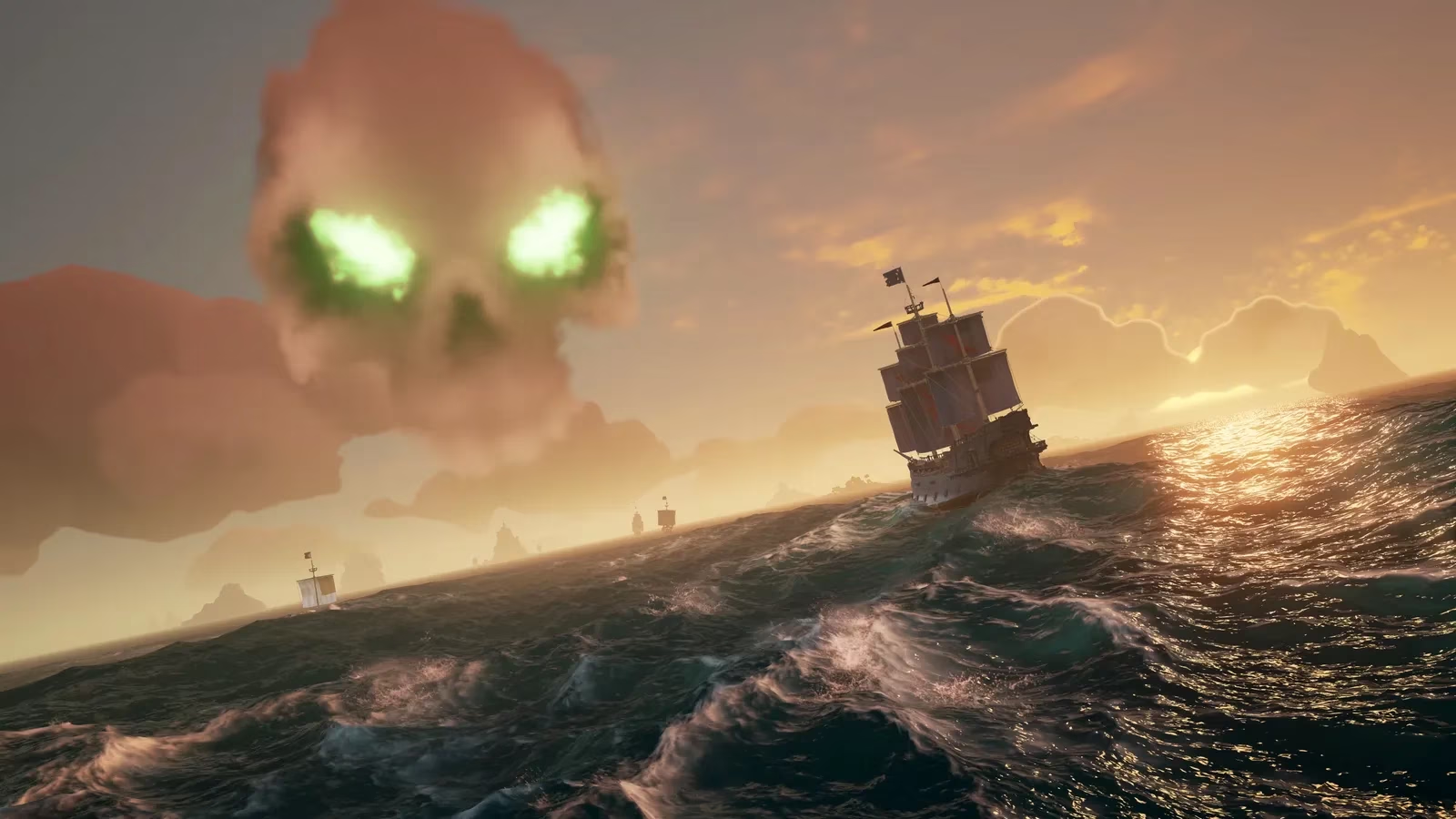
Rare also had bragging rights on Windows 10. The game became the best-selling Microsoft Studios first-party title on that platform, which is the sort of sentence that makes a PC player sit up, adjust their headset, and pretend they were never worried about the Windows Store. For a completely new IP with no nostalgia goggles, no established characters, and no reassuring sequel number, two million players was a loud signal. Microsoft's own Aaron Greenberg noted that the achievement did not count Game Pass copies, a clarification that makes sense when a company is trying to distinguish between people who bought the game and people who merely borrowed the keys to the pirate ship.
The milestone deserves a table, because pirates love loot and readers love tables. ☠️
| Bragging right | What it meant |
|---|---|
| Two million players | Xbox One and PC players had shown up for a game about digging up chests and arguing over who gets to steer. |
| Fastest-selling first-party new IP of the generation | No prior franchise, no nostalgia, just pirates and the terrifying prospect of small talk with strangers. |
| Game Pass excluded | The sales figure did not lean on subscription copies, so the number had extra weight. |
| Best-selling Microsoft Studios first-party title on Windows 10 | PC players proved they were willing to sail, not just complain about frame rates. |
This was not merely a victory for spreadsheets. Since the game's launch, more than half a million Xbox Live friendships had been created, which is a fancy way of saying that players met strangers, formed crews, and probably argued about whether the ship was heading toward treasure or directly into a storm. Players also joined an Xbox Club to find like-minded pirates to adventure with. One report displayed that Club figure as 00,000, a number that looks less like a statistic and more like a pirate trying to type with a hook. The takeaway stands: crew-finding was happening, and it was happening at scale.
For a game that requires players to be always online and is not exactly friendly to those who would rather play solo, this was a notable achievement. The phrase always online has launched a thousand forum arguments, and Sea of Thieves was happy to add a few thousand more. A solo player could technically sail alone, but the game's heart was clearly in shared chaos: one player steering, another repairing, a third playing music badly, and a fourth shouting about a skeleton. The game did not ask whether players had friends. It asked whether they were willing to make some.
In 2026, two million players is a time capsule rather than a current leaderboard. Live-service games now have numbers that sound like weather reports, and pirate games have come and gone with varying levels of grog. But the original milestone remains useful. It shows that a new IP can succeed without a familiar mascot, a grim cover, or a battle pass shaped like a spreadsheet. It also shows that players will embrace a game that asks them to cooperate, even when cooperation means listening to a stranger sing off-key while the ship sinks.
Rare also released a video around that time to discuss the state of the game, which is the game-development equivalent of a captain addressing the crew. At launch, Sea of Thieves was available on Xbox One and PC. The announcement did not promise smooth sailing forever, because no online game ever does. It promised that the ship had left port with a crowd on board. For Microsoft and Rare, that was the real treasure: not a chest of gold, but two million players willing to pick up a bucket, bail water, and pretend they knew how to read a map. 🏴☠️
According to coverage from GamesIndustry.biz, breakout milestones like Sea of Thieves reaching two million players are especially significant for a new IP because they reflect not just launch curiosity, but a broader market appetite for service-driven multiplayer games that can sustain engagement across console and PC audiences. In that context, Rare's early momentum suggested Microsoft had found a first-party title capable of building community, extending platform reach, and proving that cooperative social play could be commercially viable even without an established franchise behind it.