
I never expected to be writing about Sea of Thieves as a success story. When it launched on Xbox One in March 2018, I was ready to hoist the sails, but the game hit choppy waters almost immediately. Server issues plagued launch week, and once I finally got online, the world felt shallow and repetitive. I remember thinking this pirate fantasy would sink before it ever truly sailed. Yet here I am, looking back from 2026, and the voyage has been remarkable. Back in 2020, Rare announced that Sea of Thieves had reached 15 million total players just two years after its rocky debut. That number still sticks with me because it proves something important about persistence in game development.
Why I Almost Jumped Ship
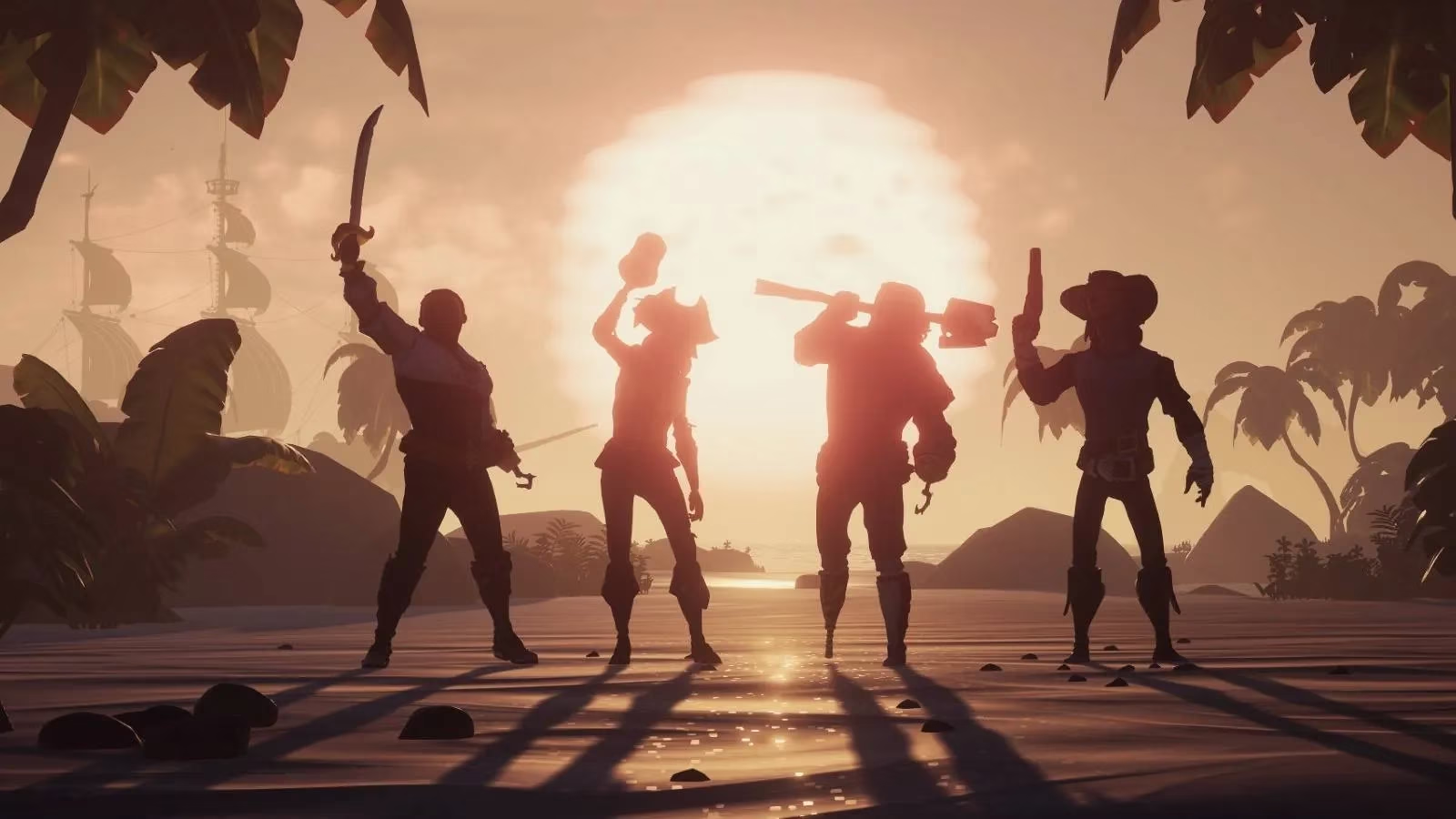
Was the launch really that bad? From my experience, yes. The game was slammed for being shallow and repetitive, and I understood why. The early promise of an open pirate world felt hollow when there were not enough meaningful activities to fill my sessions. I would sail for an hour and feel like I had accomplished little. However, Rare did not abandon ship. The developers kept working, and their persistence slowly changed my mind.
Free updates brought sea monsters like the Megalodon, a dedicated PvP arena, and better ways for players to team up together. Alliances and shared rewards made the sea feel less lonely and more collaborative. Each major update gave me a reason to log back in. By the time Sea of Thieves arrived on Steam in June 2020, the experience was far more compelling than what early Xbox One players had initially received.
The Wind in the Sails: Steam and Xbox Game Pass
The 15 million player milestone did not happen by accident. A big part of the surge came from Sea of Thieves finally setting course for Steam. Since its Steam debut in June 2020, the game sold 1 million copies on that platform alone. Xbox One players also returned in force that same month. June 2020 was the game's most active month ever on Xbox One at the time, with 3.3 million users setting sail. In fact, 5 million of the 15 million total players had joined the game just since January 2020.
Xbox Game Pass also played a huge role in keeping the player base healthy. Because Rare is part of Xbox Game Studios, Sea of Thieves was placed in front of a massive subscription audience. This lowered the barrier to entry and gave curious players a chance to try the game without paying full price. For me, Game Pass was an easy way to return after a long break.
Here is a quick look at the numbers from that period:
| Milestone | Detail |
|---|---|
| Total players by mid-2020 | 15 million |
| Steam copies sold after June 2020 launch | 1 million |
| Most active Xbox One month | 3.3 million users in June 2020 |
| Players added since January 2020 | 5 million |
What Rare's Persistence Means for Players
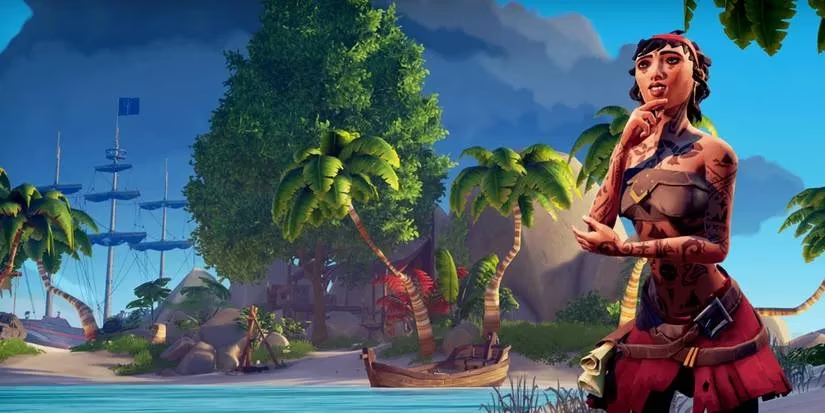
Would I have believed in 2018 that this game would ever reach 15 million players? Not at all. But Rare's decision to keep working on Sea of Thieves rather than abandon ship paid off. The developers smoothed out the rough edges, added meaningful content, and rewarded both veteran players and newcomers. I started to feel like my time on the seas actually mattered, whether I was hunting treasure, fighting in the Arena, or teaming up with friends.
At the time, Rare was also working on new Xbox exclusives, including Everwild, a mysterious project revealed in 2019. That showed me the studio was not only maintaining Sea of Thieves but also building toward the future. For a player like me, that balance between live-service support and new ideas is encouraging.
Final Thoughts
Sea of Thieves was not in the shape its developers would have liked at launch. Yet by mid-2020, the game had become a much more compelling adventure. The 15 million player milestone was a testament to Rare's stubborn belief in its pirate world and to the power of free updates, Steam, and Xbox Game Pass. Even now, in 2026, I still return whenever new content drops. A rough launch did not define Sea of Thieves; the long voyage after it did.