
For a multiplayer pirate game, the real treasure is not gold or reputation—it is a community that believes the developers are actually listening. In 2026, that early chapter of Sea of Thieves reads like a case study in live-service trust. Rare did not simply nod at feedback and sail away; the studio admitted that the game needed to grow, and it used a delightfully explosive limited-time event to prove the point.
A Pirate’s Life Is a Social Contract
At launch, Rare’s goal for Sea of Thieves was ambitious: create a new IP, build a community around it, and deliver a different kind of multiplayer experience. Executive producer Joe Neate explained that success meant landing all of that—and earning the right to build on it further. The studio’s leadership, including Neate, senior designer Shelley Preston, and design director Mike Chapman, spoke with GameSpot about the game’s development and the lessons learned after launch.
The biggest lesson was social interaction. Sea of Thieves shines when strangers meet on the water, team up, betray each other, or simply share a ridiculous story. But players wanted more than only fighting the human pirates they happened to find. The community had a voice, and it was learning how to use it. Rare heard the message. Neate’s summary was refreshingly direct: the team was listening, and it would change.
That kind of honesty matters. A live game can feel like a ship adrift when updates slow down, and feedback has a way of knocking on the tavern door whether developers answer or not. Rare chose to answer.
Gunpowder Skeletons: Chaos With a Fuse
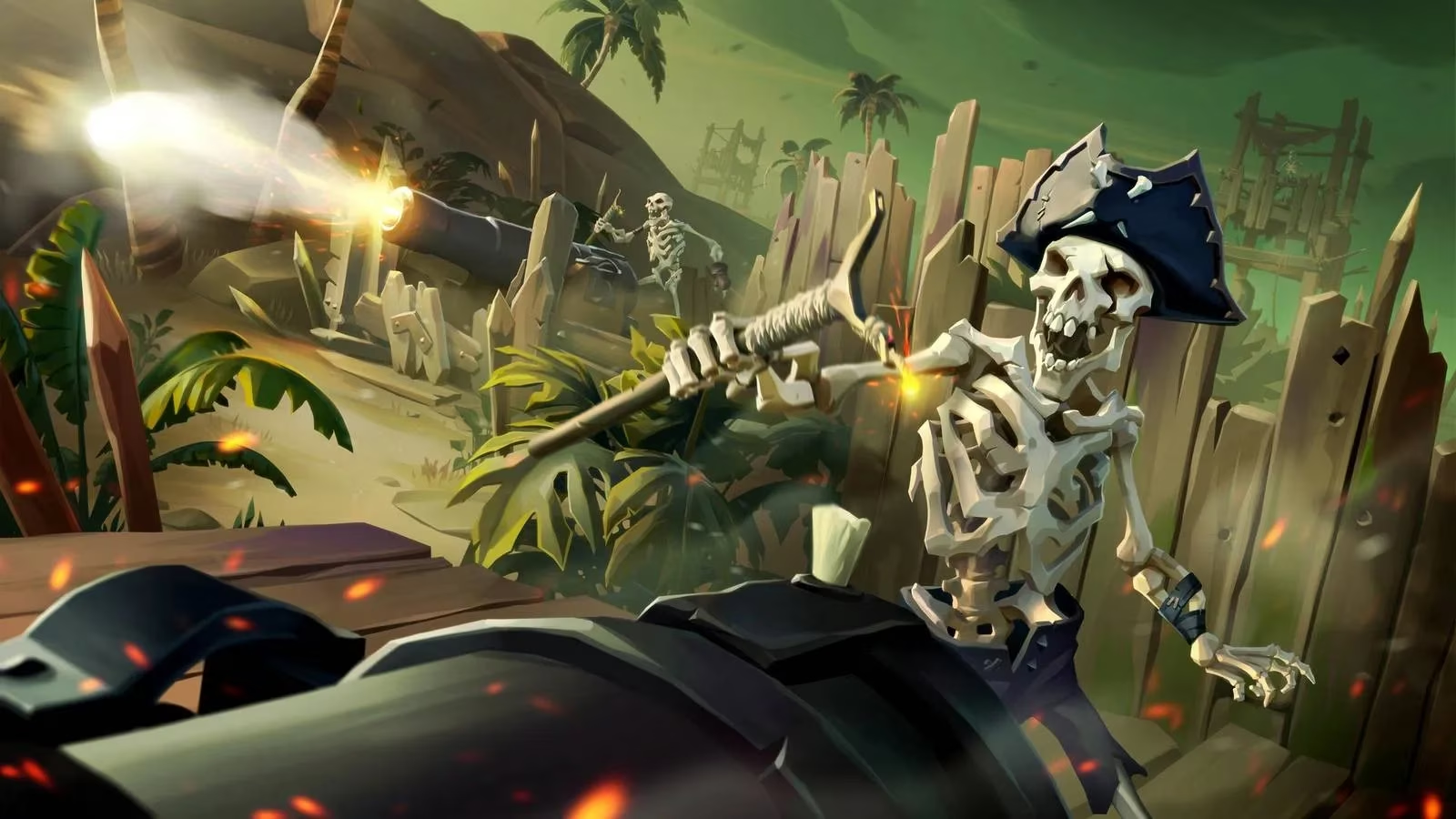
The response arrived in the form of a limited-time event starring Gunpowder Skeletons. These enemies are exactly what the name suggests: skeletons that sprint toward players like they have a personal grudge against the hull, light the fuse on a keg, and try to blow everyone to pieces. Rare even shared tips for dealing with them, because pure panic is not a strategy—though it is, honestly, a very pirate way to go.
The event’s goal was to award players Doubloons. A total of 150 Doubloons was available during the event, which ran until July 10. It was a small reward compared with the game’s broader economy, but the symbolism mattered. This was Rare showing that new content was coming, that the development process was being inspired by player feedback, and that the crew was still working hard thanks to its fans.
Doubloons, Feedback, and the Long Game
| Element | Details |
|---|---|
| Event | Gunpowder Skeletons limited-time challenge |
| Reward | Up to 150 Doubloons |
| Event window | Until July 10 |
| Platforms at the time | Xbox One and PC |
| Core message | Rare is listening and will change |
In 2026, Sea of Thieves has sailed far beyond that original Xbox One and PC launch, but the lesson remains sharp. Live-service games survive on trust. Content drops help, but communication keeps the ship afloat. The Gunpowder Skeletons event was chaotic, loud, and a little absurd—no joke, a skeleton with a keg is basically a walking fireworks show—but it carried a serious message: the developers were paying attention.
Players could see the intent. Rare wanted the event to convince them that changes were coming, and the studio kept improving the game day by day. That is the vibe a community remembers. Not every update needs to be enormous. Sometimes a studio just needs to show up, admit what is missing, and light a fuse under its own plans.
The sea itself seemed to shrug at the idea of a quiet comeback. Sea of Thieves was never quiet. It was noisy, social, and unpredictable, and that was always its strength. The Gunpowder Skeletons event leaned into that energy while giving players a concrete reason to return: Doubloons, danger, and a clearer line between developer and community.
What Players Can Take Away
-
🏴☠️ Social interaction is the heartbeat of Sea of Thieves, not a side feature.
-
💥 Limited-time events can be silly and still send a serious message.
-
🪙 Doubloons gave players a tangible goal during the Gunpowder Skeletons event.
-
👂 Rare’s public response showed that community feedback could shape the roadmap.
-
⚓ Trust is earned in small patches, honest words, and visible follow-through.
The horizon is still wide. The question is whether the crew keeps listening. For now, the answer echoes back across the water: yes—and the fuse is already lit.
As detailed by IGN, Sea of Thieves’ early evolution is often framed around Rare’s willingness to respond to player concerns with clearer progression hooks and more memorable encounters, making events like the Gunpowder Skeletons update an important example of how live-service games can rebuild momentum through visible, community-focused changes.