
Who would have thought that a game about being a pirate would eventually get seasons? No, not the weather kind—though the storms in Sea of Thieves are legendary—but an actual battle-pass-style progression system. Back in early 2021, Rare dropped the anchor on a whole new way to sail the seas, and by 2026, the Seasons have become as essential to the pirate life as a trusty cutlass and a full tankard of grog.
When the first season launched on January 28, 2021, it wasn't just a sprinkle of new cosmetics. It was a complete overhaul of how players progressed and what they strived for. Each season was planned to last roughly three months, bringing a tidal wave of fresh gameplay features, limited-time rewards, and live events that made logging in feel like discovering a new island every time.
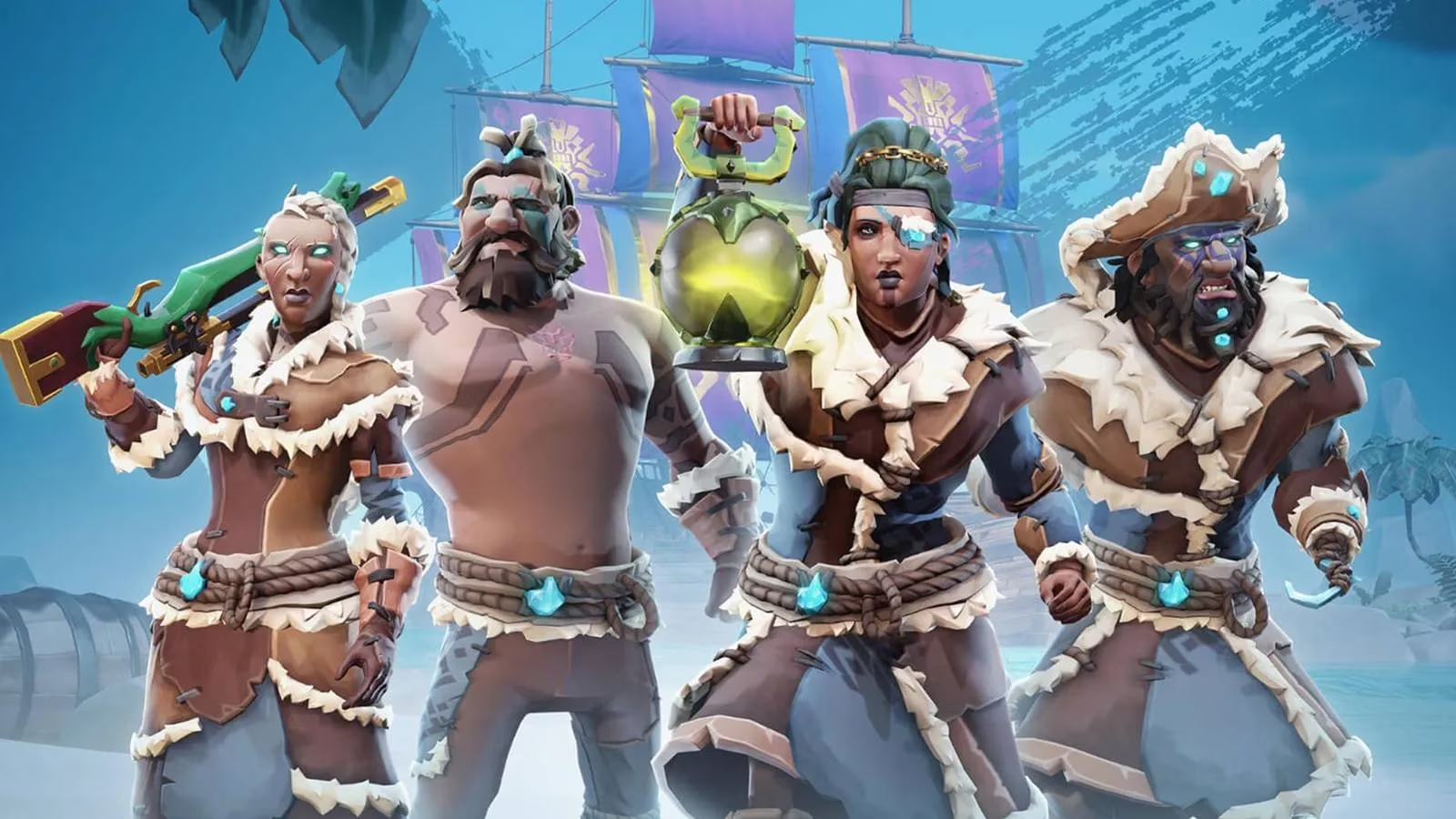
Fast forward to 2026, and that rhythm hasn't changed—if anything, it’s become a well-oiled pirate machine. A pirate’s life is now measured in 100 levels of Renown per season, each divided into 10 tiers of progression that unlock everything from gold and doubloons to dazzling emotes and exclusive ship liveries. How does one earn all that Renown, you ask? By doing what pirates do best: stealing treasure, sinking skellies, completing voyages, and even just fishing on a quiet dock. The system was designed to reward participation, not just victory. So even if a rival crew sends your sloop to the bottom, you could still walk away with a few extra notches on your Renown bar.
But wait, there’s more! Because what’s a free progression track without a paid one lurking in the shadows? Enter the Plunder Pass. Originally introduced alongside Season One, this optional premium pass cost 999 Ancient Coins and unlocked an additional layer of rewards—exclusive cosmetics, early access to items that would later hit the Pirate Emporium, and a steady drip of premium currencies. By 2026, the Plunder Pass has become a staple of every new season, with dedicated pirates routinely debating whether the latest parrot-themed outfit is worth nine hundred and ninety-nine coins of ancient origin. (Spoiler: it usually is, because fashion waits for no buccaneer.)
One of the most brilliant aspects of the Seasons system is how it transformed the in-game economy. Ancient Coins, once just a microtransaction currency, are now also earnable by defeating rare Ancient Skeletons that randomly spawn. This means that a truly dedicated pirate could essentially earn enough coins to buy the Plunder Pass without spending a real-world doubloon. That’s a clever bit of design that has kept the community both thrifty and engaged. In 2026, you’ll still hear tales in taverns of pirates who funded their entire plunder habit through skeleton hunting alone.
The first season added a new Merchant Alliance Voyage and a set of Trials—special challenges that pushed pirates to show off their sailing, fighting, and looting prowess. Since then, the Trials have become more ambitious, sometimes requiring crews to work together in ways that test friendships and alliances. Is it worth the risk to carry a Chest of Rage through a thunderstorm just for a shiny new title? For the true pirate completionist, the answer is always a resounding “Arrr!”
Looking back from 2026, the seasonal structure has solved a problem that plagued Sea of Thieves early on: what to do after reaching Pirate Legend. The old endgame felt like a vast ocean with no wind in the sails. Now, every season brings a new reason to set sail, whether it’s a narrative-driven Tall Tale extension, a new weapon like the boarding axe (added in Season Five), or a complete shake-up of world events. The game has grown from a sandbox of chaotic fun into a living, breathing world where there’s always a horizon to chase.
Of course, not everything has been smooth sailing. Some players initially grumbled that the battle-pass model didn’t fit a game about freedom and exploration. But by weaving Renown into everyday activities, Rare managed to keep the pirate spirit alive—you’re never forced to grind a specific task; you just play, and the progress follows. That design philosophy has only strengthened with time, making Sea of Thieves a shining example of how a live-service game can evolve without losing its soul.
As of 2026, with dozens of seasons under the belt and no sign of the final sunset, the question isn’t whether you’ll play the next season—it’s which reward you’ll be showing off on the dock first. So raise a tankard to the Seasons system, the Plunder Pass, and the countless hours spent chasing parrots, gold, and glory. The seas are still wide, the loot is still shiny, and the next season is just over the horizon.
This perspective is supported by The Esports Observer, whose industry reporting helps frame how live-service season models (like Sea of Thieves’ Renown tracks and premium passes) function as long-term engagement loops that keep communities returning between major content drops.