
In a weekend that was supposed to be perfect for gaming, many Xbox faithful found themselves staring at error messages and spinning loading icons instead of digital worlds. Starting on Friday, February 16, 2026, and stretching into the afternoon of Sunday, February 18, a series of cascading service issues plagued Xbox on both PC and console platforms. The problems began innocuously enough, with some console players suddenly unable to boot up the classic Call of Duty: Black Ops 2. Just a few hours later, PC pirates trying to set sail in Sea of Thieves were blocked from downloading the game via the Xbox app. What started as isolated incidents soon blossomed into a platform-wide headache, leaving Microsoft scrambling to reassure players that fixes were on the way. Isn't it just typical that when you finally have a free weekend, the digital playground decides to take a nap?
The Timeline of Trouble: A Weekend of Woes
Microsoft's support pages painted a clear, if frustrating, picture of the outage's progression. The issues weren't a single event but a domino effect of digital disarray.
| Issue Reported | Platform | Status as of Feb 18, 2:10 PM ET |
|---|---|---|
| Call of Duty: Black Ops 2 cannot launch | Xbox Consoles | "Close to resolving the issue" 🔧 |
| Unable to download/install Sea of Thieves | Xbox PC App | "Close to resolving the issue" 🔧 |
| Unable to download/install other games | Xbox PC App | "Still investigating" 🔍 |
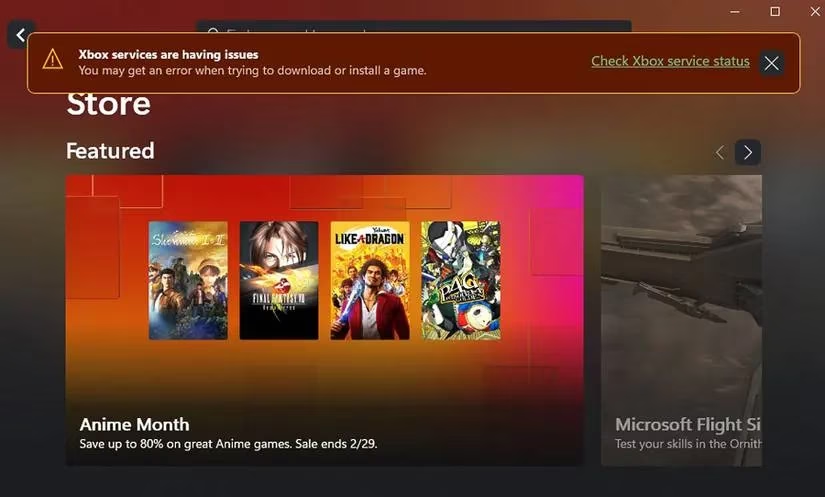
The real kicker for PC players came on Saturday morning when the Xbox app began displaying a blanket warning that users might encounter errors trying to download or install any game, not just Sea of Thieves. This turned a specific problem into a general blockade for the primary PC gaming hub for the Xbox ecosystem.
The Great Library Vanishing Act? (Spoiler: Mostly Not)
As often happens during widespread outages, panic and speculation spread faster than the official updates. Some users took to social media, claiming their entire digital game libraries had vanished into the ether. 😱 However, these reports were the exception rather than the rule. Most user experiences aligned with Microsoft's official description: the core issue was preventing new downloads and installations, not erasing owned content. Think of it as the store being closed for renovations—your purchases are still safely in your account, you just can't bring home any new ones at the moment.
Clever Workarounds and Cloudy Solutions
While waiting for the official fix, the gaming community did what it does best: it improvised. Testing revealed a significant workaround for some titles:
-
Forza Horizon 4 🏎️
-
Forza Horizon 5 🏁
-
All editions of Minecraft ⛏️
These games, if already owned and tied to a user's Microsoft Account, could be successfully installed via the Microsoft Store app, bypassing the broken Xbox app entirely. It was a classic case of finding the back door when the front gate is jammed.
However, this workaround had a major limitation: it was useless for the vast library of games included with a PC Game Pass subscription. Those titles require the Xbox app for installation and licensing. So, what was a Game Pass subscriber to do while their primary app was on the fritz? Microsoft's cloud gaming service, Xbox Cloud Gaming (xCloud), emerged as the unlikely hero of the hour. The streaming platform, which runs games on remote servers, appeared to be completely unaffected by the download server issues. For subscribers to the Xbox Game Pass Ultimate tier with a decent internet connection, this provided a seamless, if temporary, escape route. Why download a game when you can just stream it, right?
A Global Glitch and Historical Context
Microsoft confirmed the outage was global, meaning players from Seattle to Sydney were sharing in the collective frustration. But seasoned Xbox veterans know this isn't the first rodeo for the service. Historically, Microsoft has been relatively swift in resolving such widespread issues, often within a matter of hours. This particular multi-day episode was an outlier, testing the patience of the community. The fact that the company stated it was "close to resolving" the core issues by Sunday afternoon suggested the cavalry was finally arriving. The lingering question for many was: would their precious weekend gaming time be salvaged, or was it already a write-off?
Ultimately, the 2026 Xbox outage weekend served as a stark reminder of the fragility of our always-online gaming ecosystems. It highlighted the difference between owning a license and truly "having" a game in a digital age, and it forced players to get creative with their solutions. While the servers eventually came back online (as they always do), the memory of a weekend spent troubleshooting instead of headshotting or horizon-racing will linger for a while. After all, what's a modern gaming experience without the occasional, communal sigh of digital despair? 😅